Showing posts with label Park Sights. Show all posts

Monday, August 6, 2018

Serenity in the Japanese Garden

12th Century Bronze Buddha
One of our guests' favorite gardens is our Japanese Garden, which is notable for its age and that it was the first privately owned Japanese garden in North America. Mary Clark Thompson was a woman who lead the way in garden design to be sure.

And except for the waterlilies that appear in the garden's ponds during summer, this garden features no flowers. But that does not diminish its beauty. Much to the contrary, it enhances it as it allows the visitor to quietly take in the natural surroundings simply accented by stone lanterns, the Tea House, and of course, our 12th century bronze Japanese Buddha. If you talk to the guests about the garden, this larger than life-sized statue is the one piece of the garden that is almost always mentioned for the statue has an amazing and palpable serene presence.

The statue sits in the corner of the garden nearest to the Roman Bath -- always peaceful and always quiet. It is a peace that is infectious for most. But there is a story about this statue rumored to have taken place after the bombing of Pearl Harbor. Supposedly two local men were going to destroy the statue with axes as some sort of punitive act for the bombing. And sure enough, there are two cuts in the chest of the statue that had to be created with a bladed instrument and some degree of force. But only two cuts.

Is the story real? I don't truly know but I've heard it from a couple of sources and it is at least part of the Sonnenberg lore some like to share. If it is true, why did the men stop at one stroke each? Did that peaceful gaze look down into their hearts and cool their thirst for vengeance? Perhaps.
12th Century Bronze Buddha
Two cuts are visible on the statue's chest

12th Century Bronze Buddha
Offerings often appear in the statue's hands

Monday, September 18, 2017

Mythical Spotlight: Pan

One of the things you will quickly realize when looking at the statuary and other carved art pieces that grace the Sonnenberg Estate is that many characters are from the Classical Mythology of Ancient Greece and Rome. It is rather like a Greco-Roman mythology who's-who. Here is a quick spotlight of one of those characters that can be seen at Sonnenberg.

Pan
Location: Rock Garden
Type: Free-standing Statue
Mythology Origin: Ancient Greece

Description:
Pan was the god of wild places and the patron deity of shepherds. He is depicted in much the same manner as a faun with the hindquarters and horns of a goat. Pan's origins are unclear. Some tales say he is the son of Hermes while others point to Zeus or other gods. Pan was also associated with music and he was said to have created the syrinx or panpipes. (The Sonnenberg statue shows Pan holding a set of these pipes.) Being a pastoral god, natural caves and grottos instead of man-made temples are where people worshipped him. Pan is said to be the origin of the word panic due to his terror-inducing shouts.

More Info:
Pan (Wikipedia)
Pan (Ancient History)
Pan (Theoi)

Pan, Sonnenberg Gardens
Pan overlooking the Rock Garden
(Click on image to see a larger view)

Wednesday, May 31, 2017

When is the Best Time to Visit?

Old Fashioned Garden
You learn a lot about people answering the phone and fielding their questions. You learn that the disconnect with the natural world is pervasive and cross-generational as evidenced in the simple - yet very common - question, "When is the best time to visit the park?"

The real answer, which I always give first, is that there is no one time. And that the park is always beautiful and is an ever changing tapestry of sights, sounds, and scents. The natural world is a cycle not a single point in time - this is true even for the manicured, man-created ornamental gardens. Every day of every year has its own unique beauty and unique sights that will NEVER be exactly the same ever again. That too is nature.

"Always beautiful" always falls flat as an answer. The pause of dead-air on the phone or the blank stare if you are speaking in person tells you the listener is quite disappointed in the honest and true answer you have just given. An invisible and silent sigh crosses through your mind and you begin to tell about some of the sights to look for at different parts of the season. Even though you did not answer the question, they are satisfied with this information and move on. And that is so very sad because if they come only at those times, they are missing so much.

My real suggestion as to when to come is this: visit whenever you want and visit often. You will see much and start to learn the character of the place and find that beauty can be found here every day. You will also develop your own list of favorite times and sights which will certainly vary from mine.
Breakfast Bower

Friday, May 19, 2017

It is the Small Things

Perhaps it is because I am a plant nerd and field identification is one of my great loves that I zero in small details so much. Of course it could be wired into my DNA as I'm from a long line of people that never failed to notice or forgot anything from the tiniest details to decade old feuds. (Thankfully, I am not cursed with hanging onto grudges forever.) And so to me, "God is in the details" - it is the small stuff that means the most and always catches my eye.

On a walk through Sonnenberg you can't help but to see the big things - the Italian Garden, the Mansion, the fountains, the ponds, the Tea House, and more. They are the iconic things, the historic treasures that thousands of people come to see every year. But in my walks, those are just backdrops. I see the tiny and ever changing minutia of the gardens and Nature in general. A bit of bark on moss. A green katydid on a daylily. Dew on a leaf and the patterned spread of lichen on a rock. Each with their own amazing beauty and incredible stories to wonder at.

I urge you on your next visit to stop for a moment and look. Really look. Become fully present in that one moment of seeing. You will be amazed by what you see when you drop - or elevate - to that level of seeing. Your visits will never be the same again.

Spring 2017

Self-planted violas sprinkled with evergreen pollen

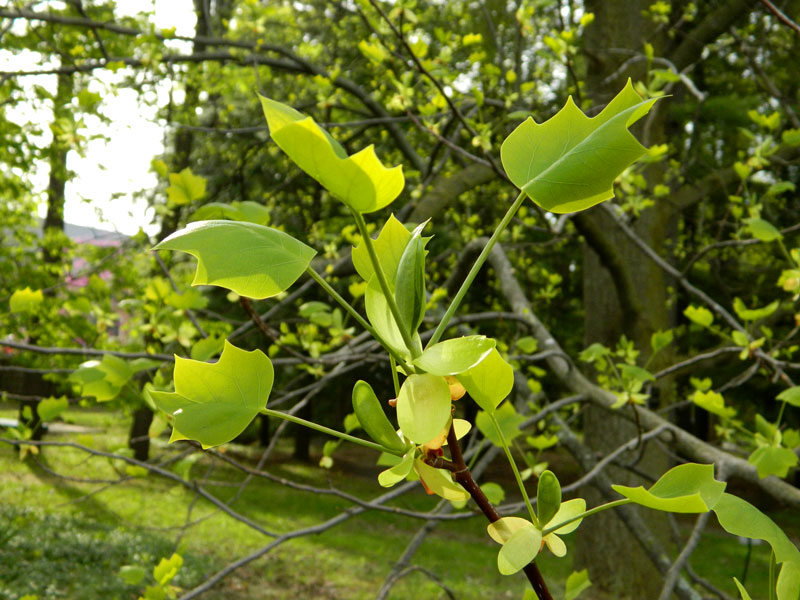
Tulip tree's young leaves reaching out

Aloe in the Greenhouse

Paper Birch bark on pine needles

Weeping beech leaves opening
and looking like tiny fans

Copper Beech with blooms hanging
like earrings
Morel mushrooms in a quiet corner
The brick walkway dusted in
pollen from the Pinetum
One final thought....

Enjoying the view? If so, bring along some young people and share looking at the tiny stuff with them. The group of you will have a whole safari of exploration and fun. And young kids are really great at this kind of seeing and will undoubtedly point out things you never saw. I'll guarantee you that priceless memories will be made by all.

Friday, March 24, 2017

All the Faces Looking Back at You

When you visit Sonnenberg Gardens and walk around the estate, something becomes abundantly clear: there are many sculpted faces looking back at you. So here is a bit of fun - how well do you know Sonnenberg? Can you place all these faces? These faces taken out of context makes this visual scavenger hunt deceptively difficult.

Face 1

Face 2

Face 3

Face 4

Face 5

Face 6

Face 7

Face 8

Face 9

Face 10

Face 11

Face 12

Face 13

Face 14

Face 15

Face 16

Wednesday, December 7, 2016

A Sea of Flowers

Each growing season sees a veritable sea of colorful foliage and blooming plants added to our gardens. More than 10,000 are planted each spring in the Italian Garden alone -- and that is only one of the garden areas we maintain. Many of the plants we add each season are tender annuals and perennials. These are plants that cannot survive our bitter and snowy winters and so we overwinter some in our greenhouses but others we buy or grow each season to be planted when the chance of frost is past.

Italian Garden
More than 10,000 colorful annuals are planted each spring to
create the floral carpet patterns in the Italian Garden
We also plant and maintain a wide range of hardy perennial plants throughout our park. These are plants that can survive the cold winters to sprout up anew as winter looses its grip and warm days return. These include a wide range of different looks, habits, and blooming times. Some favorite perennials include roses, peonies, coneflowers, hibiscus, balloon flowers, water lilies, tulips, daffodils, lenten rose, bloodroot, and more. 

While these plants do not need special winter care to survive, they do require care throughout the growing season to keep them lush and beautiful. They will also occasionally need to be replaced as the lifespan of green plants vary widely from peonies that can span over generations (they can live to be a 100 years or more) to items like clary sage that is a biennial and dies after blooming in its second year.

Old Fashioned Garden
The Old Fashioned Garden features a wide variety of blooming
perennial plants from late spring through fall.
Our Rose Garden provides not only another sea of blooms but it perfumes the air once the roses start to bloom in mid to late June. This garden features 2500 white, red, and pink roses -- Mrs. Thompson's favorite colors. Botanically speaking, all roses are perennial shrubs as they have a main woody trunk even though most don't refer to them this way. (Only specific types of roses are generally referred to as "shrub roses.") Like all such woody plants, careful pruning is needed for best shape, health, and blooms plus other care throughout the season is required to maintain the best health and showy display. 

Rose Garden
Over 2500 rose plants are featured in our Rose Garden
Besides the flowers in our nine historic gardens, color and floral delights are all throughout the site in small corner gardens, containers, and in our arboretum. A changing tapestry of color and shapes greets every Sonnenberg guest every day.

Tulips at Sonnenberg
Spring bulbs add bright color 

While we operate in cooperation with New York State, we are not funded by the State. All gardening needs at Sonnenberg -- and there are many -- are funded through the efforts of our nonprofit organization. Your donation will help to keep the flowers blooming and growing at Sonnenberg for years to come. To make your gift, click the donate button below.


"Happiness will grow if you plant the seeds of love in the garden of hope 
with compassion and care."
- Debasish Mridha

Friday, November 18, 2016

Restoration - A Work in Progress

Preservation, renovation, and restoration efforts at Sonnenberg Gardens is an ever on-going activity as the estate features many structures, statues, and gardens each in need of specialized care. Over the last ten years, $4 million dollars of improvements have been made. Some improvements, like new roofing or statue cleaning, may go largely unnoticed while other work, like this year's Palm House restoration in our greenhouse complex, is hard to miss.

One of the next items slated for restoration is the "Glorietta" in our Italian Garden. The Glorietta is a Garden Folly which is an eccentric or extravagant structure created as a garden or landscape decoration. The Glorietta is one of our most unique and interesting garden pieces and can be seen below.


William Hornaday in his book Masterpieces of Garden Making, published in 1917, has this to say about the Glorietta:
At the southwestern corner of the garden there rises a light and airy white marble summer house, with a domed canopy of iron grille work. I do not know what to call that feature, precisely; but it was imported from Italy, and it is the particular long-distance architectural feature of this garden. In one sense it is an informality; for it is a conspicuous side effect, balanced by nothing. Its real purpose is to carry a strong impression of artistic value clear down the length of the garden, and into its most remote corner.
Age and weather have been hard on the century-old carved marble and wrought iron components of the Glorietta. It is in need of specialized and expensive conservation care. These detailed images show some of the unique design elements as well as examples of the damage the years have caused. 

Sonnenberg Glorietta

Column Base Detail

Column Capital Detail

Reverse View

Ironwork Dome

While we operate in cooperation with New York State, we are not funded by the State. All operational needs and restoration activities at Sonnenberg are funded through the efforts of our nonprofit organization, Your donation will go far in helping to preserve this and other historic structures at Sonnenberg which are irreplaceable treasures. To make your gift, click the donate button below.


Friday, September 23, 2016

There's a Mushroom House?

Even though I have visited Sonnenberg Gardens since I was young, that was what I said when I first heard of it. And while it sounds like an eclectic architectural style from the 1960's, the Mushroom House was created during the Thompsons' era at Sonnenberg for the aptly named purpose of growing mushrooms.

While its condition does not allow for tours and visits, visitors can see the exterior signs of the Mushroom House during their visit.

The entrance to the Mushroom House is located at the Gardener's Cottage, which also is the location of the Sonnenberg Administrative offices. (Access to the Mushroom House is NOT allowed.)

Sonnenberg Gardens Mushroom House

Skylights for this underground area were made from glass and steel and set into the ground above. They look rather like decorative manhole covers and are located next to the cafe' (on the greenhouse side). Not all of the skylights have weathered the 100+ years well and some are missing some or all of the handmade glass disks.

Sonnenberg Gardens Mushroom House

Sonnenberg Gardens Mushroom House

Sonnenberg Gardens Mushroom House

Be sure to look for this little known piece of Sonnenberg on your next visit!

Tuesday, September 1, 2015

Guard Below!

Last week I made the mistake of parking under a black walnut (Juglans nigra) tree. It was a beautiful sunny morning and a "munch-munch-munch" greeted me when I got out of my car. I looked up into the green leafy branches and saw a fat squirrel munching away at a black walnut. I chuckled and went into the office.
Black Walnut nuts in husk

If you are not familiar with black walnuts, this time of the year they still are on the trees and in astringent green husks - see picture to the right. Later in the season, if they have a chance, they drop and the green husks will turn a rich dark brown as they soften and rot off of the nut. The nut meats of black walnut have a strong, unique flavor that is prized by many -- including the squirrel kingdom at Sonnenberg. Even though the nuts are a wild delicacy, the shells are notoriously difficult to crack. This, however, means little to the strong-toothed squirrel.

Back to my car. When I went to leave later in the day, I saw the error of my ways. My car was littered with bits of the green walnut hulls and dried walnut hull juice with I suspect a copious amount of squirrel spit intermixed in. I immediately got this image of the squirrel sitting up in the tree in denim overalls like some backwoods cartoon character spitting his walnut "tobaccy" on my car. Yeah, I do have a vivid imagination and grew up on Looney Tunes. Lesson: squirrels and walnuts equal a mess so don't park there.

If you visit Sonnenberg this time of the year and stop for a moment to listen, you will without a doubt hear the unmistakable munch-munch-munch of some pudgy squirrel. They all have their winter feedbag on and are gorging themselves on acorns, walnuts, hickory nuts, butternuts, and more found throughout the estate. While out snapping some images yesterday for a different article for the blog, I spotted this squirrel enjoying the nuts from the black walnut's sister species, our eastern butternut (Juglans cinerea). The butternut is not as common of a sight as the black walnut but we have a number of these trees located in the Deer Park area of the park. This squirrel, clearly comfortable, in a nearby maple tree barely registered my presence. And so frequent were his obvious trips between the maple and the butternuts that a clear path in the grass between the two trees could be seen.

You know, I think that sassy squirrel even posed for me. What do you think?

Sassy Munching Squirrel
Stretching out along the branch
Sassy Munching Squirrel
He didn't stop munching once