Showing posts with label Photo Essay. Show all posts

Friday, May 19, 2017

It is the Small Things

Perhaps it is because I am a plant nerd and field identification is one of my great loves that I zero in small details so much. Of course it could be wired into my DNA as I'm from a long line of people that never failed to notice or forgot anything from the tiniest details to decade old feuds. (Thankfully, I am not cursed with hanging onto grudges forever.) And so to me, "God is in the details" - it is the small stuff that means the most and always catches my eye.

On a walk through Sonnenberg you can't help but to see the big things - the Italian Garden, the Mansion, the fountains, the ponds, the Tea House, and more. They are the iconic things, the historic treasures that thousands of people come to see every year. But in my walks, those are just backdrops. I see the tiny and ever changing minutia of the gardens and Nature in general. A bit of bark on moss. A green katydid on a daylily. Dew on a leaf and the patterned spread of lichen on a rock. Each with their own amazing beauty and incredible stories to wonder at.

I urge you on your next visit to stop for a moment and look. Really look. Become fully present in that one moment of seeing. You will be amazed by what you see when you drop - or elevate - to that level of seeing. Your visits will never be the same again.

Spring 2017

Self-planted violas sprinkled with evergreen pollen

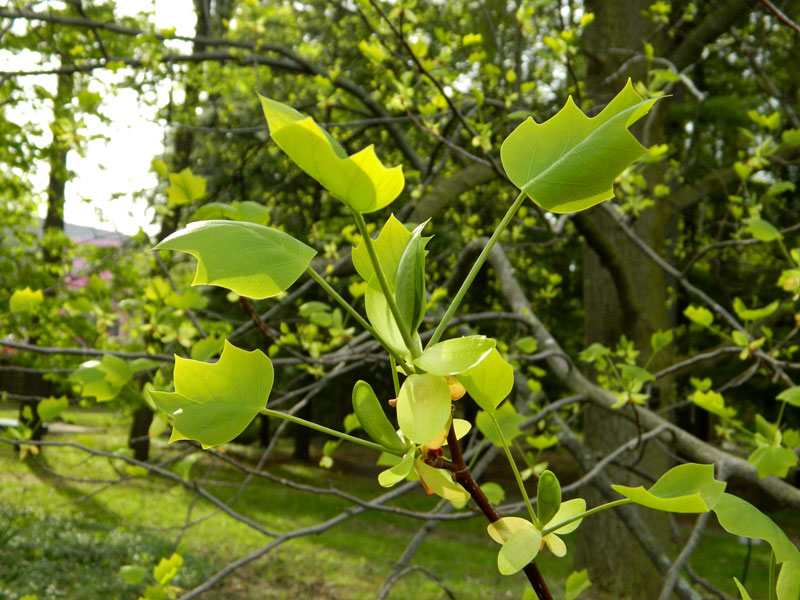
Tulip tree's young leaves reaching out

Aloe in the Greenhouse

Paper Birch bark on pine needles

Weeping beech leaves opening
and looking like tiny fans

Copper Beech with blooms hanging
like earrings
Morel mushrooms in a quiet corner
The brick walkway dusted in
pollen from the Pinetum
One final thought....

Enjoying the view? If so, bring along some young people and share looking at the tiny stuff with them. The group of you will have a whole safari of exploration and fun. And young kids are really great at this kind of seeing and will undoubtedly point out things you never saw. I'll guarantee you that priceless memories will be made by all.

Friday, March 24, 2017

All the Faces Looking Back at You

When you visit Sonnenberg Gardens and walk around the estate, something becomes abundantly clear: there are many sculpted faces looking back at you. So here is a bit of fun - how well do you know Sonnenberg? Can you place all these faces? These faces taken out of context makes this visual scavenger hunt deceptively difficult.

Face 1

Face 2

Face 3

Face 4

Face 5

Face 6

Face 7

Face 8

Face 9

Face 10

Face 11

Face 12

Face 13

Face 14

Face 15

Face 16

Friday, November 18, 2016

Restoration - A Work in Progress

Preservation, renovation, and restoration efforts at Sonnenberg Gardens is an ever on-going activity as the estate features many structures, statues, and gardens each in need of specialized care. Over the last ten years, $4 million dollars of improvements have been made. Some improvements, like new roofing or statue cleaning, may go largely unnoticed while other work, like this year's Palm House restoration in our greenhouse complex, is hard to miss.

One of the next items slated for restoration is the "Glorietta" in our Italian Garden. The Glorietta is a Garden Folly which is an eccentric or extravagant structure created as a garden or landscape decoration. The Glorietta is one of our most unique and interesting garden pieces and can be seen below.


William Hornaday in his book Masterpieces of Garden Making, published in 1917, has this to say about the Glorietta:
At the southwestern corner of the garden there rises a light and airy white marble summer house, with a domed canopy of iron grille work. I do not know what to call that feature, precisely; but it was imported from Italy, and it is the particular long-distance architectural feature of this garden. In one sense it is an informality; for it is a conspicuous side effect, balanced by nothing. Its real purpose is to carry a strong impression of artistic value clear down the length of the garden, and into its most remote corner.
Age and weather have been hard on the century-old carved marble and wrought iron components of the Glorietta. It is in need of specialized and expensive conservation care. These detailed images show some of the unique design elements as well as examples of the damage the years have caused. 

Sonnenberg Glorietta

Column Base Detail

Column Capital Detail

Reverse View

Ironwork Dome

While we operate in cooperation with New York State, we are not funded by the State. All operational needs and restoration activities at Sonnenberg are funded through the efforts of our nonprofit organization, Your donation will go far in helping to preserve this and other historic structures at Sonnenberg which are irreplaceable treasures. To make your gift, click the donate button below.


Wednesday, June 8, 2016

But tho' an old man, I am but a young gardener


It tells you that our third United States President understood well what it was to be a gardener and a lover of plants. It means that you will spend your life in the joy of learning new things.

Wednesday, May 4, 2016

Photography in the Gardens

Tea house, Sonnenberg GardensWith our hands-on photography workshop coming up in 2 weeks, I've been thinking a lot about the photos I've snapped here - and it is many. I take hundreds of photos each year of Sonnenberg alone. Last summer I decided to have fun taking photos in the Japanese Garden with an origami crane I folded up for the occasion - and it was a lot of fun!

Simple props like a pebble, leaf, flower, or pine cone can also make for very simple and beautiful images. Try it - I'm sure you'll enjoy it.

I should say one of the things I am very passionate about with photographs is the post picture taking process. While I will crop and occasionally make minor adjustments to exposure or levels to better match the image to what I saw, I believe the best photographs are what you saw and the camera captured. I feel that when the images are heavily modified via Photoshop and other digital tools, they become digital art and are no longer in the realm of photography. I'm not saying that is bad, just a different art. 

The National Geographic, always known for the stunning photos, has this to say about digital darkroom techniques for one of their activities. Some great advice for you to try out.

Origami Crane in the Japanese Garden


Monday, November 23, 2015

Fairy Rings and Other Fabulous Fungi

While blooms begin to wind down as summer turns into fall, another sight becomes increasingly more common throughout our arboretum and less manicured areas - that would be the colorful and unusual fungi making themselves visible throughout our park. Along with this photo essay of Sonnenberg fungi, we will give some interesting and usual facts about fungi. Enjoy!

Click any of the images to see a larger view.

1. The largest organism on Earth is a fungus. There is a fungus in eastern Oregon that would fill 4 square miles! Read more...

 While not as large as the monster fungus in Oregon, giant puffballs (Calvatia gigantea) are a common fall Sonnenberg sight.


2. Fairy rings are naturally occurring rings or arcs of mushrooms. There is a great wealth of folklore from the globe about fairy rings. Some say they are places where fairies danced. Others say they are dangerous places that are best avoided else dire consequences may befall any human unlucky enough to enter one. Read more...

Here is a picture of  a fairy ring at in the Pinetum at Sonnenberg. Even though I do not think that a wild fairy mob would whisk me away to the Land of Fairy should I foolishly cross the circle, I respectfully walked around it.


3. There are 10,000 species of fungi in North America. Read more...

While we certainly do not have 10,000 different species of fungi at Sonnenberg, fungi can be spotted amongst the green and wooded areas throughout the year. They vary in shape, size, and color from tiny toadstools to huge puffballs.


4. While it is hard to believe, the part of mushrooms that we see is but a small part of the fungus organism. The mushroom is only the fruiting body of the fungus - somewhat like an apple is to an apple tree. The main and growing part of the fungus - which is hidden in the ground or rotting log, is called the mycelium. Read more...


5. While they may grow somewhat plant-like, fungi are not plants. Nor are they animals. They are in their own grouping or Kingdom which includes a large number of diverse and often unusual species. Read more...

Friday, November 20, 2015

Wooden Sashinko, Japanese Embroidery Patterns in the Tea House

One of the great treasures of Sonnenberg Gardens & Mansion State Historic Park is the Japanese Teahouse in its Japanese Garden. Mary Clark Thompson, one of the original owners of Sonnenberg, hired Kikujiro Wadamori in 1906 to build her Japanese Garden. Wadamori, originally from Izumo in southern Japan but now living and working in the United States, and a crew of seven men built the garden and teahouse. The garden was designed to be a miniature landscape reminiscent of the topography of Japan complete with mountains and valleys. It should be noted that this garden is one of the earliest privately owned Japanese gardens in the United States and the teahouse is one of the few in America that is in a publically accessible location.

The craftsmanship of the workmen that created the teahouse is on display both the inside and outside of this 100+ year old structure. Here are pictures of how the outside of the teahouse looks today:


Sonnenberg Gardens Japanese Teahouse
The Japanese Teahouse seen from outside
Sonnenberg Gardens Japanese Teahouse
Farther view of the Japanese Teahouse
 
The interior, while seldom viewed by visitors, is equally beautiful albeit in a quiet simplicity of form and style. One of the details to catch the eye while inside the teahouse are carved wooden panels/screens used in the wall and sliding panels separating the two halves of the teahouse. These can be seen in the picture below. There are two sets of panels, each featuring a different geometric pattern.

Sonnenberg Gardens Japanese Teahouse
Interior view of the Japanese Teahouse - wooden
screen panels are visible

Practitioners of the traditional Japanese craft of sashiko will surely recognize the patterns in the wooden screens. Sashiko is a Japanese embroidery style that was used to repair and reinforce as well as beautify clothing. It became a rural domestic craft during the Edo Era (1615 - 1868) and has continued on to present day. The stitching often features repeating geometric designs and its most recognizable form consists of white embroidery on an indigo fabric. A picture of a modern sashiko stich sampler can be seen below.

A modern sashiko stitch sampler
(click on this image or any in the article for a larger view)

 Asanoha (Hemp Leaf)

The pattern in the panel above the doorway is known as the asanoha or hemp leaf. A detail from this panel can be seen below:


Japanese Teahouse - interior panel detail

The asanoha is a star-like pattern that is undoubtedly the most famous of sashiko patterns. This pattern's origins lay in China where the pattern was associated with Buddhism and represented radiating light or the inner light of the soul. This pattern has often been used on children's clothes and bedding in hopes they would grow up strong like the hemp plant - hemp was used by many common people for fabric prior to the widespread availability of cotton in Japan. The pattern has also symbolized a wish for good health.


Shippō tsunagi (Linked Seven Treasures)

The wooden screens running through the middle of the sliding panels feature a variation on the Shippō tsunagi or Linked Seven Treasures pattern. A detail of that panel can be seen below.


Japanese Teahouse - interior panel detail


This pattern is also called shippō or Seven Treasures and it was in use in the Heian era 1,000 years before it appeared in sashiko designs. This design also references Buddhism for the seven treasures appear in Buddhist sutras. Those seven treasures are: gold, silver, lapis lazuli, agate, pearl, coral, and crystal.

 Like to learn more about sashiko? One of the best references commonly available outside of Japan is The Ultimate Sashiko Sourcebook by Susan Briscoe. It contains history, patterns, and directions on how to begin doing this craft.